This year was not a big reading year by any means. We spent months househunting, then packing, then moving. On top of so, so many other things. Naturally, reading fell somewhat to the wayside.
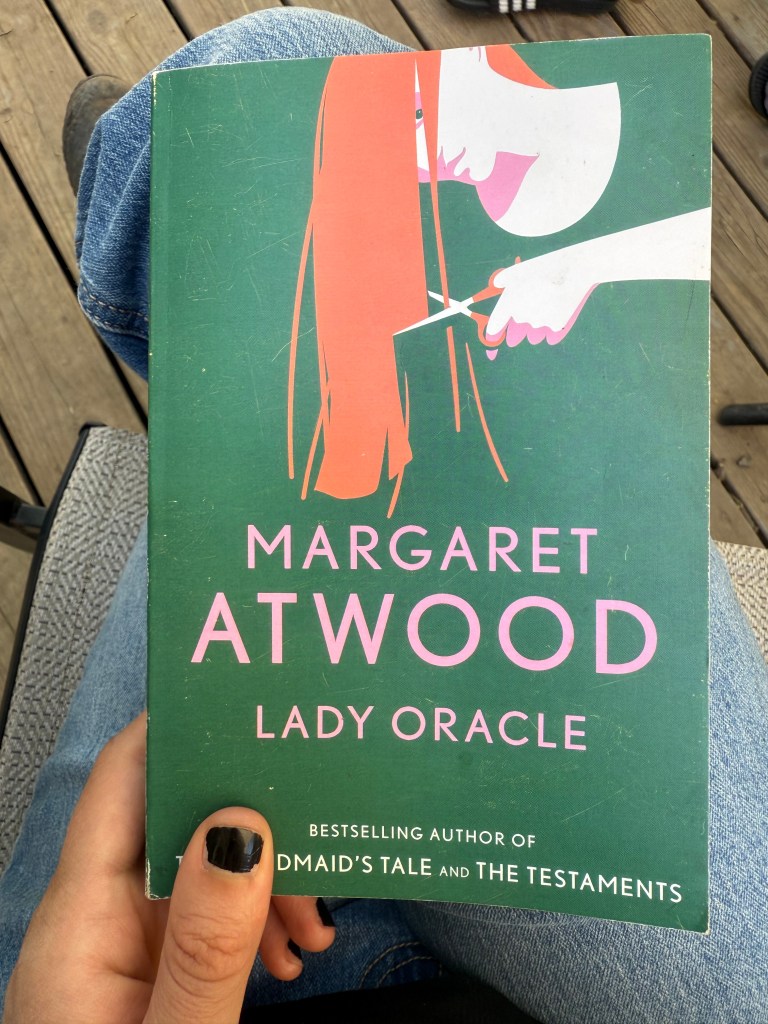
If I go by the photos saved to my camera roll, I read something like 30 books. Not the most books I’ve read in a year by any means. Either way, much like last year, I fed the list into ChatGPT, asked it for a recap, and here’s what it spit out:
A Portrait of You as a Reader: Insights into 2025
Your 2025 reading list suggests a year shaped less by discovery and more by return—returning to trusted authors, familiar questions, and enduring tensions between interior life and the systems that contain it. Where last year’s reading traced a wide arc across eras and genres, this year’s choices feel more concentrated, more deliberate, and more psychologically inward.
Rather than chasing novelty, your reading leaned toward depth: revisiting voices that continue to reward close attention and lingering with books that resist easy resolution.
Familiar Voices as Anchors
A defining feature of your 2025 reading is the recurrence of certain authors, most notably Joyce Carol Oates and Haruki Murakami. These are not casual inclusions. Their repeated presence suggests an ongoing dialogue rather than a one-off encounter.
Oates, in particular, appears as a sustained study. Reading her across multiple works highlights an interest in ambition, excess, and moral unease. Her novels offer no comfort, only precision—an unflinching examination of violence, obsession, and interior fracture. Returning to her again and again suggests a reader drawn to intensity without spectacle, someone willing to sit with discomfort as a form of insight.
Murakami’s role is different but equally telling. His novels function as atmospheric counterpoints—surreal, meditative, suspended between worlds. Even when unfinished, they seem to serve a purpose: offering a familiar rhythm and emotional temperature rather than narrative closure. Together, these authors suggest a reader who values voice over plot and continuity over novelty.
Women Resisting Legibility
Another strong through line is an interest in women who refuse explanation or disrupt social expectations. Works like The Vegetarian, Mina’s Matchbox, Convenience Store Woman, and Earthlings explore what happens when women step outside acceptable roles—not loudly, but irrevocably.
These books are not concerned with empowerment narratives or tidy rebellion. Instead, they dwell in refusal: refusal of marriage, appetite, productivity, or coherence itself. The women at their centers are often misread, pathologized, or dismissed, yet the narratives never rush to correct those interpretations.
Your attraction to these stories suggests a reader attuned to restraint and subtext, one who values ambiguity over affirmation. These are books that trust silence as much as declaration.
Moral Pressure and Speculative Unease
Speculative and dystopian works appear again this year, though with a sharper focus. Parable of the Talents stands out not as an imagined future but as an ethical stress test—one that feels uncomfortably proximate. Alongside older speculative works and cultural artifacts like Close Encounters of the Third Kind, these selections suggest less interest in world-building and more in belief, obsession, and collective psychology.
Rather than escapism, these books function as mirrors. They ask what people cling to when systems fail and how easily conviction curdles into control. Your reading here points to a fascination with moral pressure: how individuals behave when fear, faith, or desperation takes hold.
Nature, Systems, and Interconnection
Nonfiction and literary works centered on nature and interconnected systems add another dimension to your year. Books like Entangled Life and The God of the Woods shift attention away from individual psychology toward broader ecological, familial, and spiritual networks.
These slower, more contemplative reads suggest a widening of scale—an interest in how lives intersect beyond personal agency. They reflect a reader willing to trade momentum for perspective, and answers for humility.
The Role of Abandonment
Notably, some books remained unfinished—and that, too, is revealing. The willingness to stop reading without guilt suggests a reader with growing discernment. Rather than pushing through out of obligation, you allowed timing and resonance to guide completion. This marks a shift from accumulation toward intention.
2025 in Conversation with 2024
Compared to 2024, which was expansive and exploratory—balancing classics, speculative fiction, and modern literary voices—2025 feels more inward and selective. Last year’s reading traced themes of memory, loneliness, and resilience across a wide literary landscape. This year narrows the lens.
Where 2024 asked What can literature show me?, 2025 seems to ask Who do I return to, and why?
There are fewer classics this year, fewer genre leaps, and less overt experimentation. In their place is depth: repeated engagement with authors who probe psychological extremes, bodily autonomy, and quiet rebellion. The shift suggests a reader moving from exploration to excavation—less interested in surveying the terrain than in digging deeper into specific fault lines.
What Your 2025 Reading Reveals
Taken as a whole, your 2025 reading portrays a reader drawn to intensity without excess, ambiguity without confusion, and discomfort without spectacle. You favor books that resist explanation, center interior lives, and challenge the notion that clarity is always desirable.
You read not to escape or collect, but to attend—to language, to silence, and to the spaces where meaning remains unresolved. It is a quieter reading year than the last, but also a more focused one. And in that focus, there is confidence.
 Sarah Brennan
Leave a comment